
Heavy Duty Commercial Overhead Door Installation Manual: Maximizing MTBF in Industrial Projects
In 24/7 manufacturing facilities, the Mean Time Between Failures (MTBF) of an industrial door is largely determined during its initial installation. Deviations from strict engineering tolerances lead to premature hardware fatigue, track binding, and catastrophic motor failure. This technical document outlines the critical protocols within the commercial overhead door installation manual. We detail laser alignment requirements for 2.5mm galvanized tracks, torsion spring calibration, and how ABX’s QR Code BOM system digitizes preventive maintenance, ensuring wholesale buyers achieve maximum operational uptime.
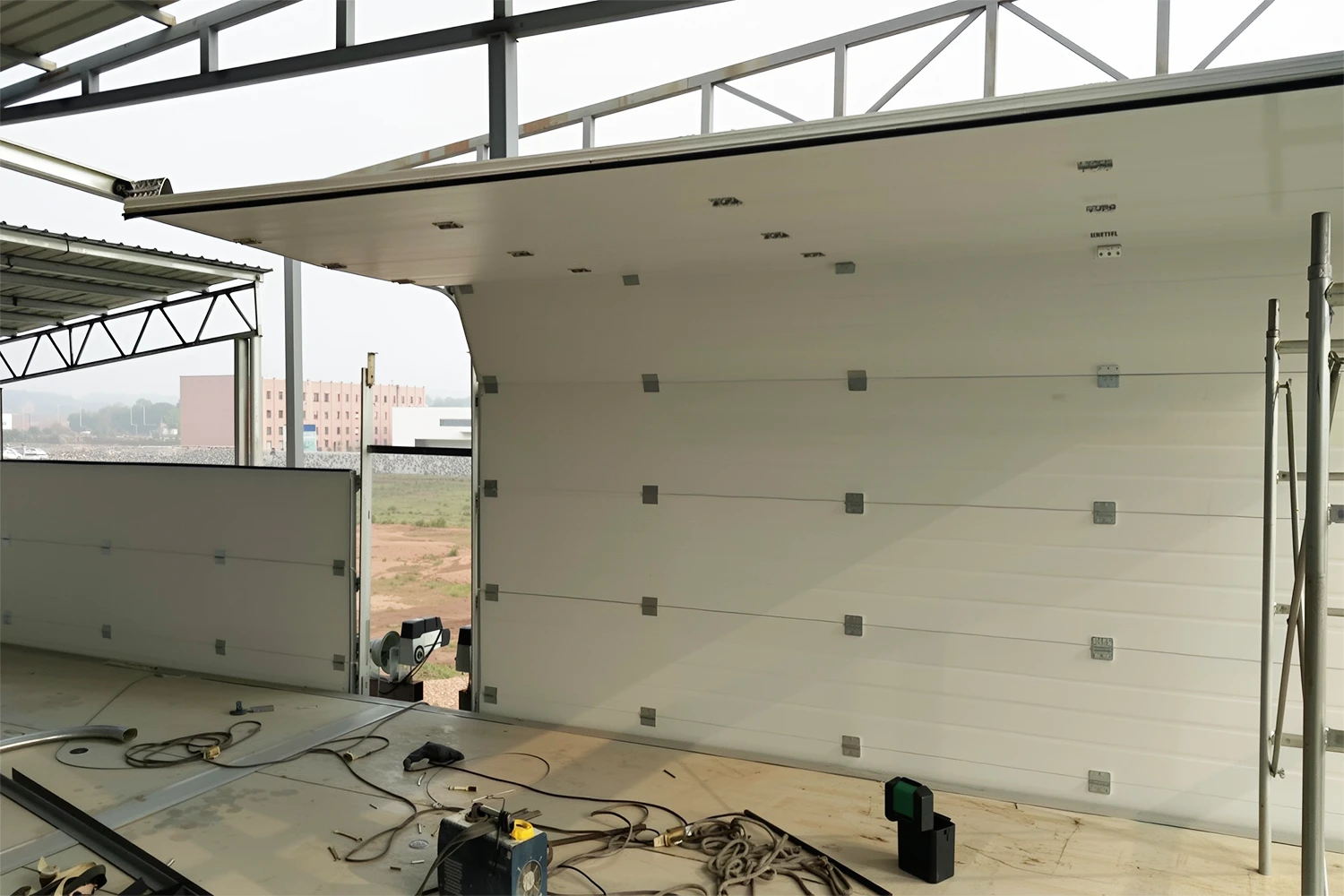
Precision Engineering: Track Alignment and Tolerances
The structural foundation of any heavy-duty commercial door is its track system. Standard installations relying on manual leveling are insufficient for oversized industrial doors. The ABX overhead door installation manual mandates the use of laser alignment tools to ensure the 2.5mm thick galvanized steel tracks are plumb and level within a strict 2.0mm tolerance over a 10-meter span.
Failure to meet these tolerances introduces severe dynamic friction against the long-stem steel rollers. This parasitic drag forces the industrial operator to exceed its rated 60% duty cycle, inevitably leading to thermal shutdown and premature gearbox wear. Rigid adherence to the installation manual eliminates these early-stage mechanical failures (infant mortality).
Counterbalance Calibration: High-Cycle Springs
The torsion spring assembly bears the entire dead weight of the PU sandwich panels. For heavy-duty applications, ABX specifies shot-peened, electrophoretic-coated springs engineered for 30,000 cycles. During installation, winding tension must be mathematically calibrated to the door’s exact weight. Improper tensioning creates an unbalanced load, causing the door to free-fall or forcing the motor to act as a primary lifting mechanism rather than a guide, which voids CE/ISO safety compliance.
Digitizing Preventive Maintenance: The QR Code BOM System
Even with flawless installation, industrial environments require strict Preventive Maintenance (PM) schedules. To reduce Mean Time To Recovery (MTTR) during routine servicing or unexpected breakdowns, ABX digitizes the maintenance workflow.
Every commercial door manufactured in our 36,000 sqm facility features a unique QR Code Lifecycle tag. Facility managers scan this ID to instantly access the specific Bill of Materials (BOM), wiring schematics, and the original overhead door installation manual. If a specific 130Nm motor or roller requires replacement, procurement can order the exact OEM part instantly, bypassing third-party diagnostic delays and ensuring the facility’s logistics flow remains uninterrupted.
| Installation Protocol | ABX Engineering Standard | Operational Benefit (MTBF Impact) |
|---|---|---|
| Track Alignment | Laser-guided; 2.0mm tolerance | Eliminates roller binding and motor thermal overload. |
| Spring Calibration | Mathematically tensioned for 30k cycles | Ensures perfect balance; prevents catastrophic gear failure. |
| Maintenance System | QR Code linked to cloud BOM | Reduces parts identification time from days to seconds. |
Actionable Next Step: Standardize your project’s installation and maintenance protocols. Contact the ABX engineering team today to request a comprehensive overhead door installation manual, PM schedule guidelines, and a wholesale project quote.