
Motorised Garage Doors vs. Manual: OpEx Reduction and ROI Analysis for Industrial Projects
When budgeting for industrial facility upgrades, procurement managers must evaluate the Capital Expenditure (CapEx) of motorised garage doors against the Operating Expenditure (OpEx) of manual systems. A strict financial analysis reveals that manual doors incur severe hidden costs in labor inefficiency, HVAC energy waste, and safety liabilities. This document provides a data-driven ROI analysis of electric roll up garage door openers, demonstrating how automation and BOM-linked maintenance deliver long-term profitability for wholesale industrial projects.
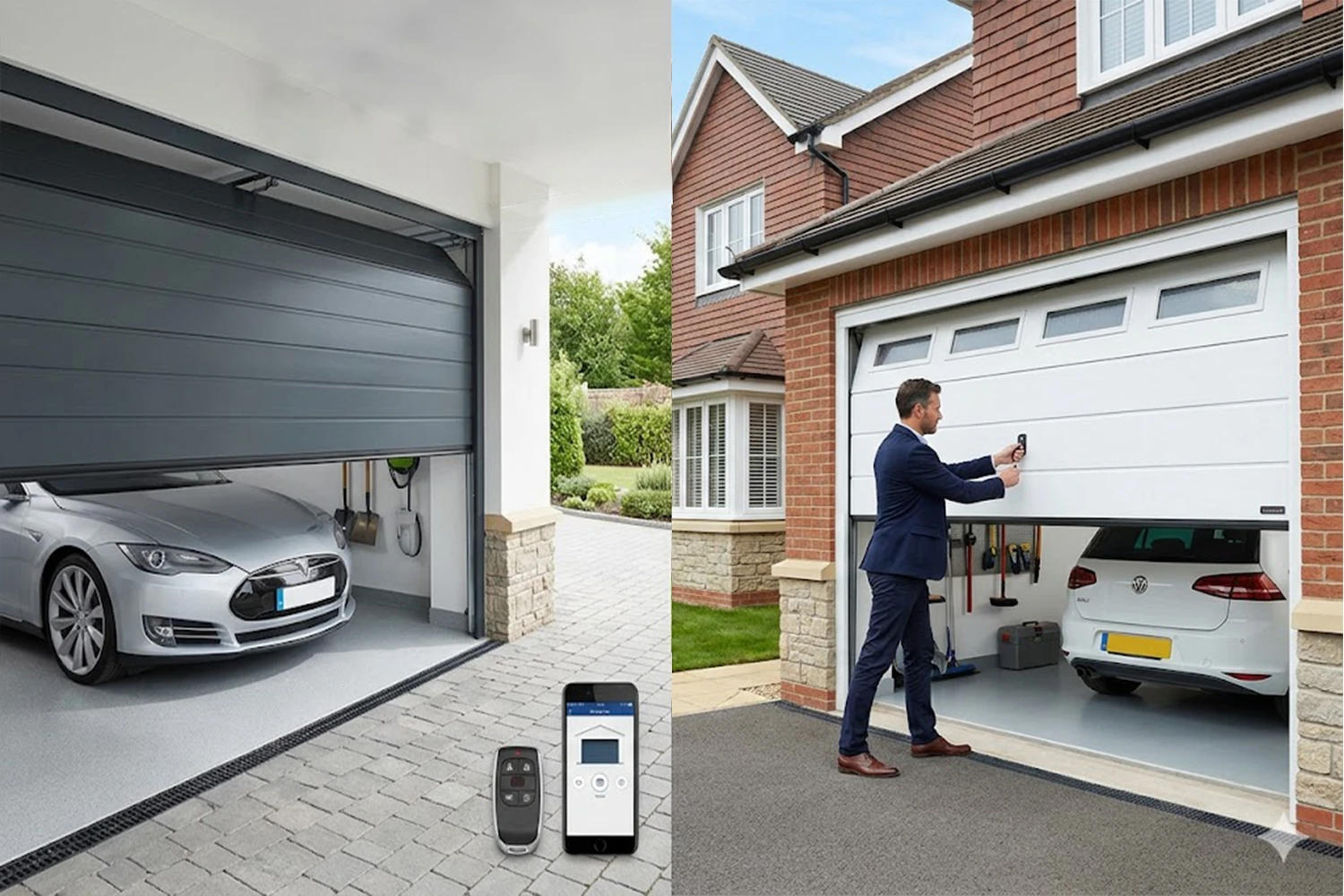
CapEx vs. OpEx: The Hidden Costs of Manual Doors
Manual doors require physical exertion and time. In a high-throughput logistics center, a forklift driver must dismount, manually hoist the door, drive through, dismount again, and close the door. This process adds an average of 2 minutes per cycle. At 50 cycles a day, a facility loses over 1.5 hours of productive labor daily per door.
To avoid this labor loss, personnel frequently leave manual doors open indefinitely. In temperature-controlled environments, the thermal transmittance (kW/h loss) caused by an open door far exceeds the U-value of the insulated panels, driving up utility bills and causing severe condensation issues.
Calculating ROI with Electric Roll Up Garage Door Openers
Upgrading to heavy-duty motorised garage doors directly targets OpEx reduction. ABX specifies electric roll up garage door openers capable of rapid deployment, integrated with PLC-based auto-close timers.
- Labor Efficiency: Integrated with radar or magnetic loop sensors, automatic doors allow forklifts to pass without stopping. This eliminates idle time, directly increasing the pallets-per-hour throughput.
- HVAC Stabilization: Automated controls ensure the door closes immediately after the vehicle passes. This strict open-time management drastically reduces air infiltration. The resulting HVAC energy savings typically offset the initial motor CapEx within 12 to 18 months.
Safety Compliance and Risk Mitigation
Manual heavy-duty doors pose severe ergonomic risks to workers and are prone to free-fall accidents if counterbalance springs fail. ABX motorised systems mitigate these liabilities. Our automatic doors are CE and ISO45001 certified, equipped with centrifugal anti-drop brakes and pneumatic bottom edge sensors that instantly reverse the door upon detecting an obstacle, preventing costly forklift collisions.
Wholesale Supplier Support and Lifecycle Tracking
To maximize ROI, the automated system must remain operational. ABX, a leading OEM manufacturer with a 36,000 sqm facility, ensures industrial-grade durability. Every motorised door is integrated into our QR Code Lifecycle System. If a sensor requires replacement, scanning the BOM code allows procurement to order the exact part instantly, reducing maintenance downtime to near zero.
| Operational Metric | Manual Doors (High OpEx) | ABX Motorised Doors (High ROI) |
|---|---|---|
| Labor Efficiency | High idle time; manual operation required. | Zero idle time; automated sensor actuation. |
| HVAC Energy Loss | Severe (doors often left open). | Minimal (auto-close PLC programming). |
| Safety & Compliance | High ergonomic risk; potential free-fall. | CE/ISO certified; anti-drop & edge sensors. |
Actionable Next Step: Stop losing money on operational inefficiencies. Contact the ABX engineering team today to request a customized ROI calculation, HVAC energy savings report, and a wholesale project quote for motorised industrial doors.