
Wind Load Ratings: Why Hurricane-Rated Garage Doors are Mandatory in Coastal Regions
Thermal leakage in coastal cold chain logistics is a silent profit killer, and wind pressure is its primary accomplice. For facility managers operating near the ocean, the challenge is two-fold: battling corrosive salt air and resisting high-velocity wind loads. When a standard door deflects under wind pressure, the perimeter seals are compromised, leading to a massive “energy hemorrhage” that spikes refrigeration costs. Hurricane-rated garage doors are no longer an optional upgrade; they are an essential engineering requirement to maintain the thermal envelope and structural security of modern warehouses.
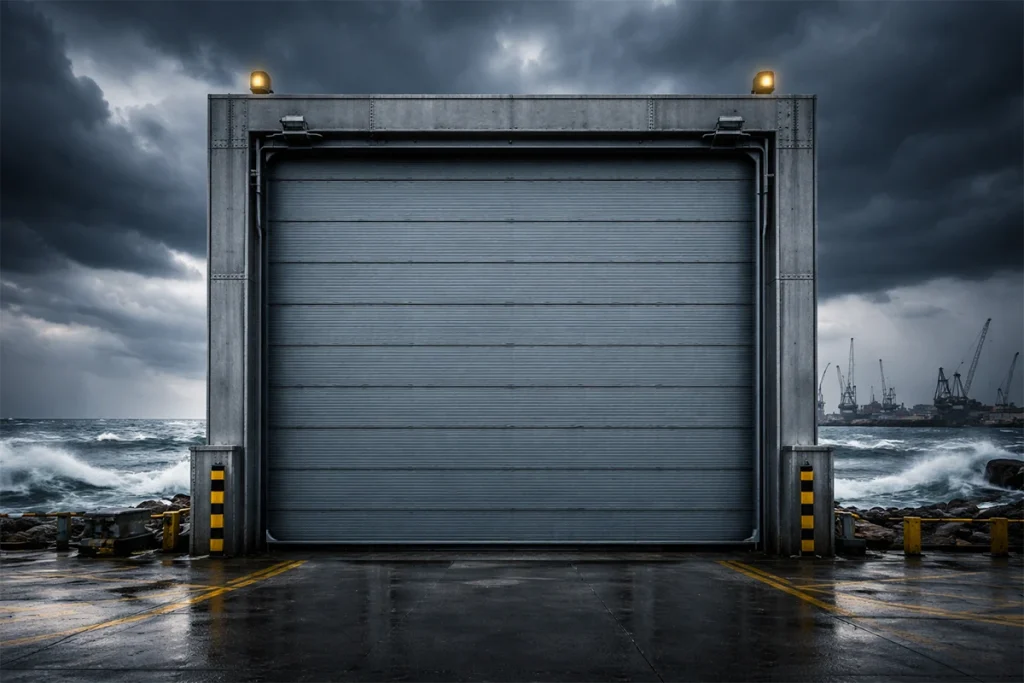
Deciphering Wind Load Ratings: Static vs. Cyclic Pressure
Understanding wind load ratings requires a grasp of how air pressure interacts with large-surface industrial structures. A door’s ability to withstand wind is measured by its Design Pressure (DP), which accounts for both positive pressure (pushing against the door) and negative pressure (suction pulling it away).
Structural Reinforcement
Hurricane-rated systems utilize heavy-gauge steel tracks and internal U-bars (struts) to prevent the panels from buckling under extreme PSF (pounds per square foot) loads.
Impact Resistance
In many coastal zones, doors must also pass large missile impact tests, ensuring that flying debris during a storm does not breach the facility’s security.
Technical Comparison: Wind-Resistant Engineering for ROI
For facility leads, the choice of door technology dictates the operational uptime after a storm event. The table below illustrates the performance gap between standard industrial doors and ABX high-performance wind-rated solutions.
Performance Matrix: Wind Resistance & Efficiency
Feature | Standard Sectional Door | ABX Hurricane-Rated Sectional | ABX High-Speed Spiral (Wind-Rated) |
Wind Velocity | < 25 m/s | 35 – 45 m/s | Up to 50 m/s (Hurricane Force) |
Cycle Speed | 0.2 m/s (Slow) | 0.25 m/s (Reinforced) | 1.5 – 2.5 m/s (Ultra-Fast) |
Energy Retention | Poor under pressure | Good (Heavy seal) | Exceptional (Rapid Closure) |
Maintenance Need | High after wind load | Low (Structural Rigidity) | Low (High-Cycle Hardware) |
The Impact of Wind Deflection on Thermal Integrity
The most dangerous aspect of wind load is not the total collapse of the door, but “micro-deflection.” When wind pushes against a hurricane-rated garage door, the reinforced structure limits movement to within millimeters. In contrast, a non-rated door will bow, creating gaps at the header and jambs.
Air Infiltration : These gaps allow warm, humid coastal air to rush into the cold storage, causing immediate frost buildup on evaporators and increasing the compressor’s workload by 30-50%.
Seal Restoration : Reinforced doors ensure that once the wind gust subsides, the panels return to their original seated position against the seals, maintaining the facility’s U-value.
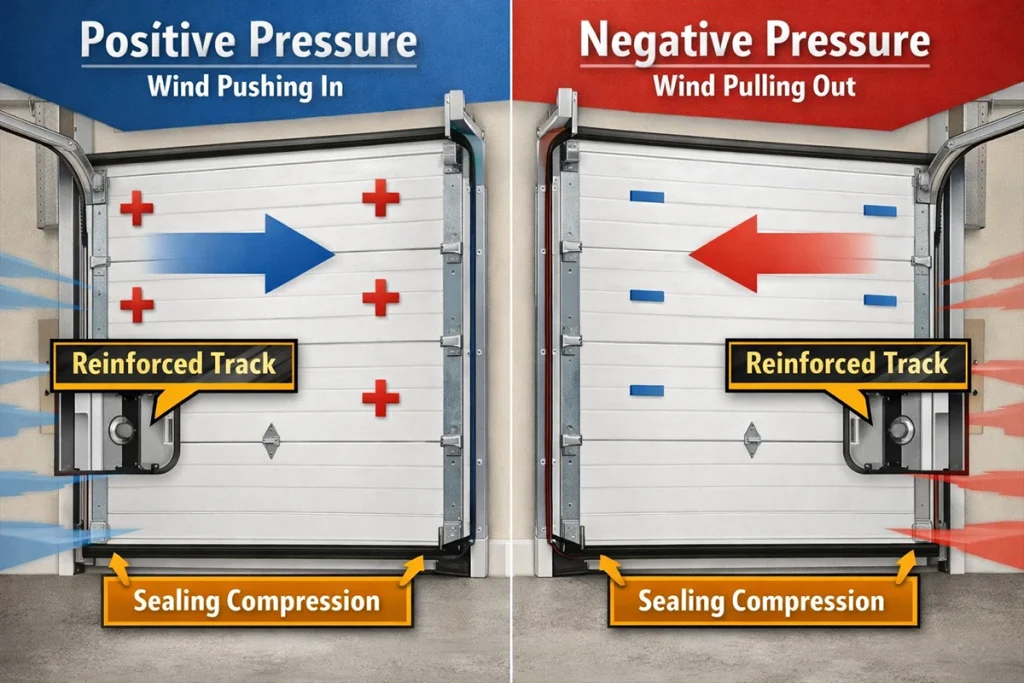
Expert Tip: U-Value Stability Under Load
A door’s R-value is meaningless if the U-value (thermal transmittance) fluctuates during high winds. Always specify a door with dual-fin EPDM side seals and heavy-duty bottom “astragal” seals. These components must remain compressed even when the door is subjected to its maximum design pressure. Structural rigidity is the foundation of energy efficiency.
Strategizing for Long-Term Structural Security
Investing in wind load ratings is a risk mitigation strategy. For modern businesses, the cost of a single day of downtime or the loss of temperature-sensitive inventory far outweighs the initial investment in a hurricane-rated system.
By selecting ABX Doors, facility managers leverage industrial IoT-enabled monitoring that tracks wind speed and door status in real-time, providing an extra layer of operational intelligence. Aligning your infrastructure with hurricane-rated standards ensures that your facility is not just operational today, but resilient tomorrow.
Request a technical datasheet or CAD specification from our engineering team today.