
Commercial Overhead Door Dimensions: Engineering Heavy-Duty Solutions for Industrial Facilities
During the design phase of industrial plants and logistics parks, specifying commercial overhead door dimensions and track layouts is critical for project execution. Whether accommodating standard 14×16 feet access or engineering custom 20-foot wide heavy-duty doors, rigorous structural calculations are required. This guide analyzes track lifting configurations based on available headroom and details compliance with ANSI/DASMA 108 wind load standards, providing contractors with a technical roadmap from sizing to hardware specification.
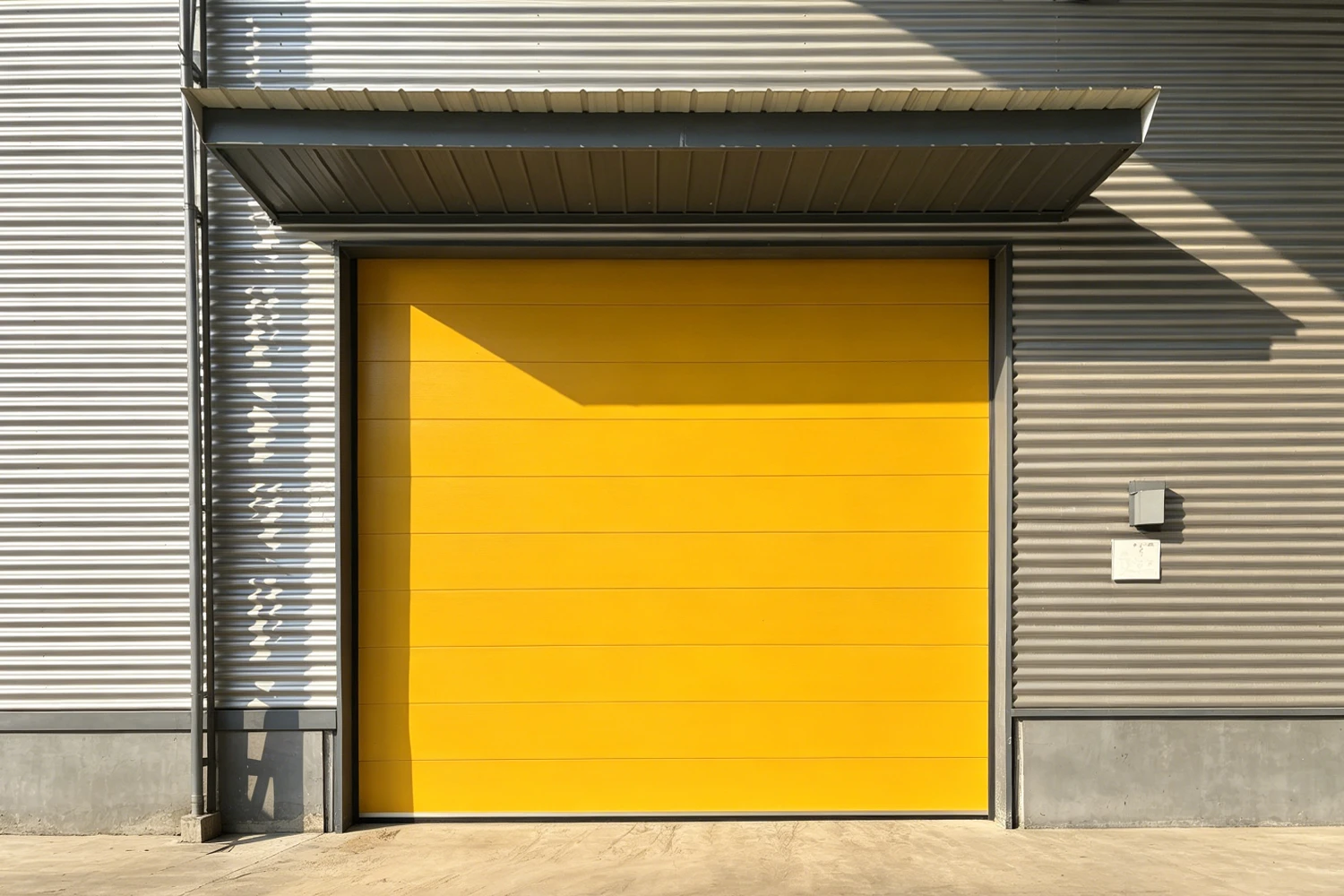
Sizing Commercial Doors and Headroom Integration
Specifying overhead door dimensions is not merely about vehicle clearance; it requires precise integration with the building’s structural envelope. The critical metric for architects and builders is headroom—the space between the top of the door opening and the ceiling. Standard commercial sizes, such as 14×16 garage doors, often utilize standard lift tracks requiring 15 to 18 inches of headroom. However, modern industrial facilities frequently demand specialized configurations to avoid interfering with overhead cranes or HVAC ductwork.
Track Configurations: Vertical Lift vs. Standard Lift
Selecting the correct track system is essential for operational stability. ABX engineers evaluate facility blueprints to recommend the optimal lifting method. For warehouses with high ceilings, a Vertical Lift configuration allows the door to open straight up, keeping the ceiling clear. If headroom is limited but depth is available, a High Lift or Standard Lift system is deployed. Each configuration utilizes 2.0mm to 2.5mm heavy-duty galvanized steel tracks to support the dynamic load of the door panels.
Structural Engineering for Oversized Heavy-Duty Doors
When projects require oversized access, such as garage doors 20 feet wide, structural integrity becomes the primary engineering challenge. The massive surface area acts as a sail, making the door highly susceptible to wind pressure and deflection.
Meeting ANSI/DASMA 108 Wind Load Standards
Compliance with safety standards is mandatory for industrial projects. ABX heavy-duty doors are engineered to meet and exceed ANSI/DASMA 108 wind load requirements. By integrating reinforced steel wind struts across the interior of the double-layer aluminum or steel panels, our doors can withstand wind pressures up to 700N/m2 (equivalent to a Category 12 typhoon). This prevents panel blowout and ensures the building envelope remains secure during extreme weather events.
Manufacturing Capacity and Project Delivery
Executing large-scale industrial projects requires a wholesale supplier with robust manufacturing capabilities. ABX’s 36,000 sqm facility features a fully automated single-panel production line, ensuring dimensional accuracy and consistent quality across bulk orders. Our OEM/ODM experience guarantees that even the most complex custom dimensions are delivered on schedule.
| Track Configuration | Typical Headroom Required | Best Industrial Application |
|---|---|---|
| Standard Lift | 15″ – 18″ | Standard loading docks with limited ceiling height. |
| High Lift | Opening Height + 12″ | Facilities needing clearance for forklifts near the door. |
| Vertical Lift | Opening Height + 18″ | Warehouses with high ceilings and overhead cranes. |
Actionable Next Step: Ensure your facility’s access points are engineered for safety and efficiency. Contact ABX today to submit your architectural blueprints for a structural assessment, track layout recommendations, and a comprehensive project quote.