
Commercial Dock High Doors: Engineering Loading Bay Integration for Logistics Projects
In high-volume distribution centers, the loading bay is the primary node for operational efficiency and safety. Specifying isolated overhead doors without considering dock leveler integration is a critical engineering oversight. This technical document details the dimensional standards for commercial dock high doors, the implementation of IP65-rated electrical interlocking matrices, and the specification of high-cycle hardware. By standardizing these components, wholesale buyers and facility managers can eliminate forklift accidents, reduce preventive maintenance intervals, and ensure a high ROI for logistics projects.
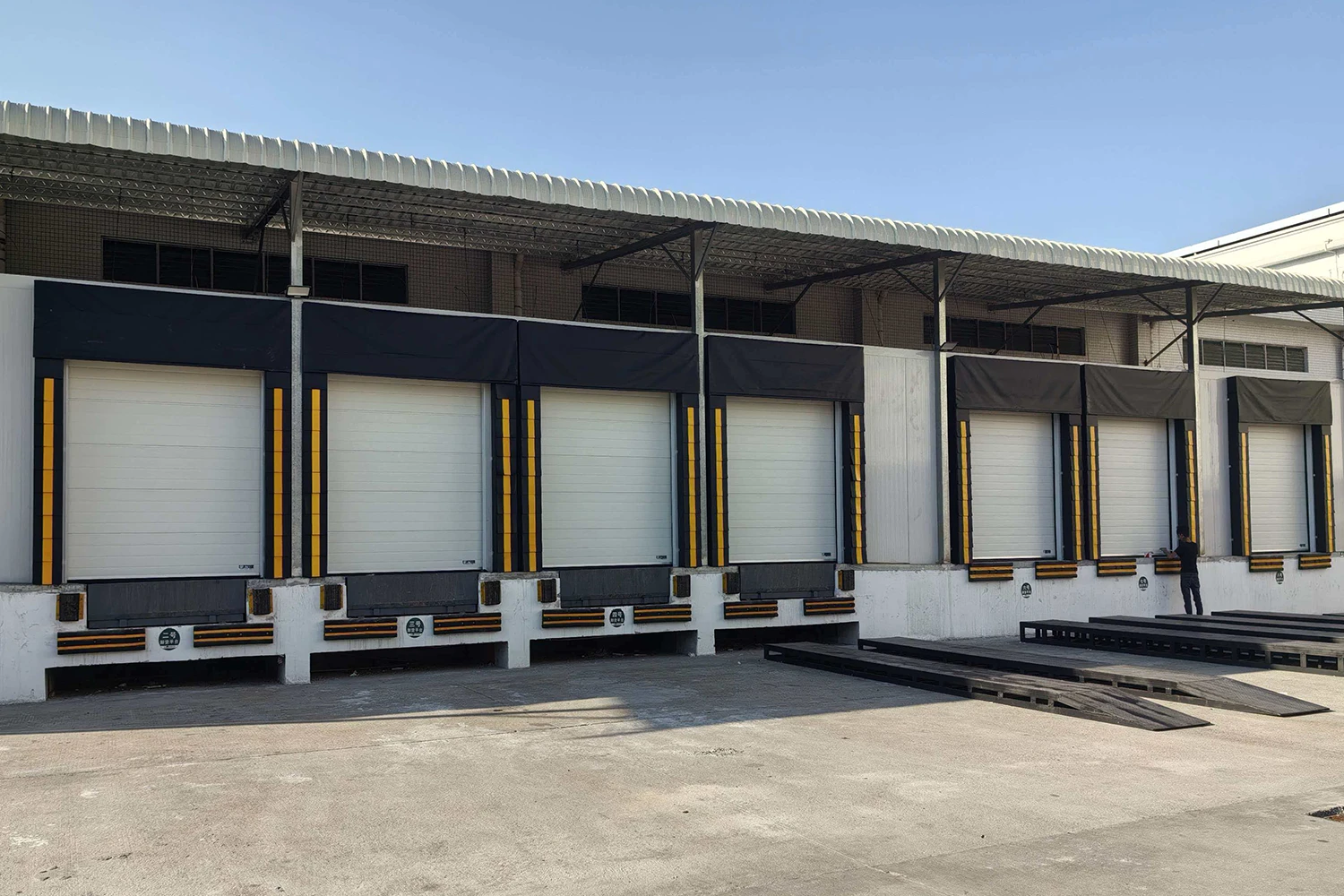
Dimensional Standards and Bay Configuration
A properly engineered loading dock must accommodate a wide range of trailer dimensions while strictly controlling the facility’s thermal envelope. The industry standard for commercial dock high doors is 8×9 feet or 9×10 feet, designed to align with a 48-inch elevated dock foundation. To minimize air infiltration when the door is closed, ABX specifies 40mm polyurethane insulated panels (density ≥45 kg/m³) equipped with heavy-duty EPDM bottom weatherstripping that compresses against the dock leveler’s diamond-plate deck.
Electrical Interlocking and IP65 Control Matrices
The most frequent cause of dock door damage is premature deployment of the hydraulic dock leveler before the door is fully open. ABX eliminates this risk through an integrated control matrix. Our automatic dock doors and levelers are electrically interlocked via an IP65-rated control panel. The PLC logic dictates that the leveler’s hydraulic pump remains disabled until the door’s upper limit switch is engaged. This fail-safe protocol protects the bottom door panels from forklift impact and mechanical shearing.
High-Cycle Hardware Specifications for 24/7 Operations
Logistics facilities operate continuously, meaning standard commercial hardware will experience metal fatigue within months. ABX engineers heavy-duty industrial doors specifically for high-frequency environments.
- Counterbalance System: We specify shot-peened, electrophoretic-coated torsion springs mathematically calibrated for 30,000 cycles. This metallurgical treatment prevents micro-cracking under continuous dynamic stress.
- Track and Roller Assembly: To withstand constant forklift vibration and wind loads, we utilize 2.0mm thick galvanized steel tracks secured with heavy-duty commercial brackets, paired with long-stem steel rollers for maximum track retention.
OEM Manufacturing and Lifecycle BOM Tracking
Sourcing from a certified manufacturer mitigates project risk. ABX operates a 36,000 sqm automated facility, ensuring all products meet CE and ISO9001 standards. To address maintenance downtime, every ABX door features a QR Code Lifecycle System. Scanning the code instantly retrieves the exact Bill of Materials (BOM), allowing procurement to order precise replacement tracks or panels without manual measurement.
| Engineering Parameter | ABX Industrial Specification | Operational Impact for Logistics |
|---|---|---|
| System Integration | PLC-based Electrical Interlock | Prevents bottom panel damage; ensures forklift safety. |
| Hardware Lifecycle | Shot-peened Springs (30,000 cycles) | Extends maintenance intervals; reduces bay downtime. |
| Control Enclosure | IP65-Rated Control Box | Protects electronics from dust and moisture in harsh environments. |
Actionable Next Step: Standardize your loading bay operations. Contact the ABX engineering team today to request CAD integration drawings for dock high doors and levelers, high-cycle hardware specs, and a wholesale project quote.