
Real Wood vs. Faux Wood Steel Garage Doors: Which Is Right for Your Facility?
Inefficient entryways represent the primary source of energy leakage in temperature-controlled logistics. For facility managers overseeing cold chain operations, every second a door remains open—or every micro-gap in an aging seal—translates directly into surging operational costs. While aesthetic appeal is vital for modern business parks, the technical performance of a door determines its long-term Return on Investment (ROI). The debate between real wood garage doors and faux wood steel garage doors often centers on the tension between organic beauty and industrial-grade thermal integrity.
Thermal Efficiency and the Cold Chain Energy Crisis
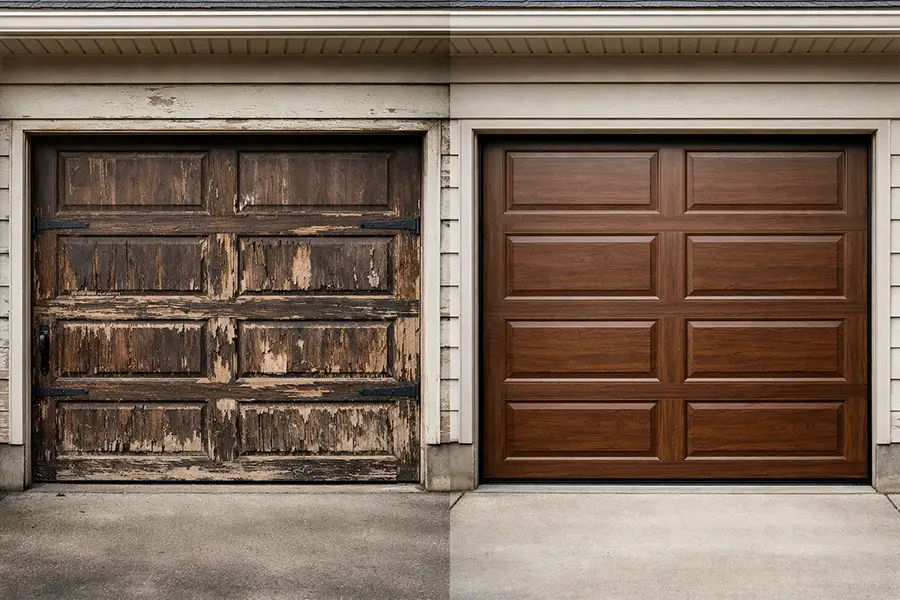
Maintaining a strict thermal envelope is non-negotiable for pharmaceutical and food-grade storage. Real wood garage doors, while naturally insulating, possess inherent structural vulnerabilities. Timber reacts to humidity and temperature fluctuations, leading to warping that compromises the perimeter seal. In contrast, faux wood steel garage doors utilize a multi-layer sandwich construction that provides a superior thermal barrier.

The Impact of Polyurethane Foam Injection
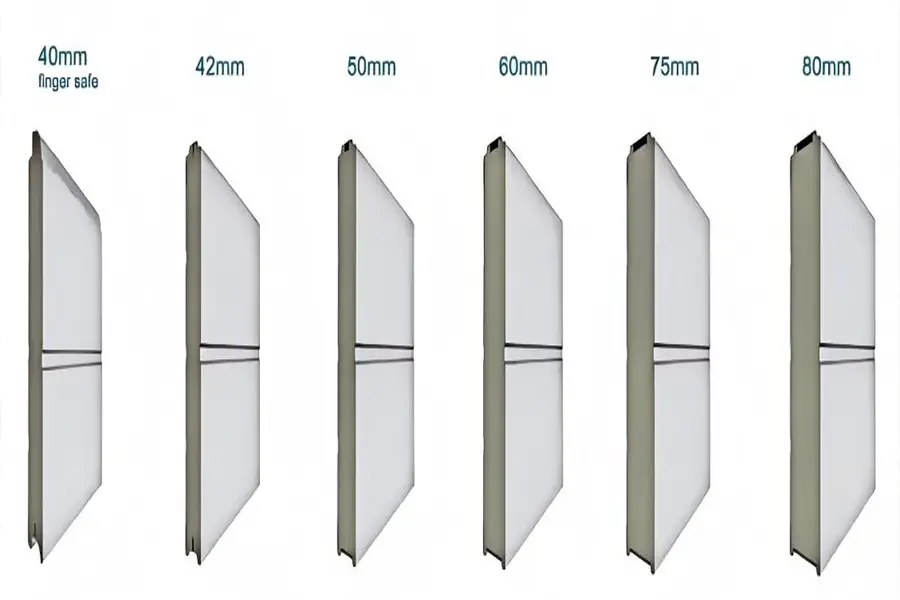
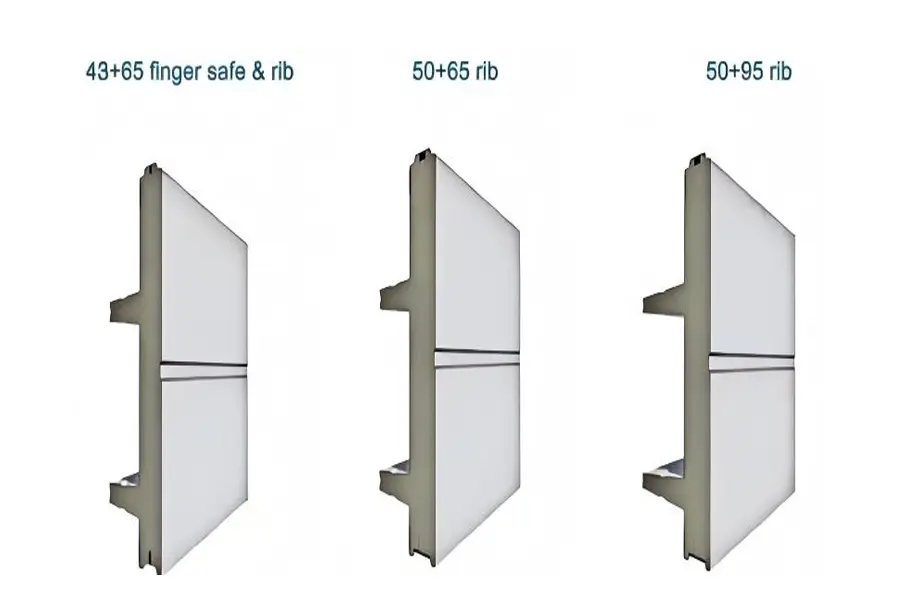
Professional-grade steel doors feature high-density, CFC-free polyurethane foam injected between galvanized steel skins. This process creates a rigid bond that achieves an R-value of 18.0 or higher, effectively neutralizing heat infiltration. For a cold chain warehouse, this level of thermal resistance can reduce refrigeration energy consumption by up to 20% annually.
Expert Tip: Prioritize U-value over Aesthetics
When evaluating doors for temperature-controlled environments, focus on the U-value (thermal transmittance). While R-value measures heat resistance, the U-value accounts for the entire door assembly, including hardware and perimeter seals. A low U-value indicates superior airtightness, which is critical for preventing frost buildup on track systems.
Durability and Maintenance ROI in High-Traffic Environments
Logistics hubs operate under high-cycle conditions, demanding components that resist mechanical fatigue. Real wood garage doors require biennial sanding and refinishing to prevent rot and UV degradation—a recurring expense that facility managers must account for in their OpEx budgets.
Feature | Real Wood Garage Doors | Faux Wood Steel Doors |
Material Composition | Solid Timber / Layers | 24-Gauge Galvanized Steel |
Thermal Performance | Variable (Depends on wood type) | High R-Value (PU Insulation) |
Moisture Resistance | Low (Susceptible to rot) | High (Rust-Resistant Coating) |
Cycle Life | Low to Medium | High-Cycle (Up to 100k cycles) |
Maintenance Requirements | High (Refinishing every 2 years) | Low (Occasional cleaning) |
Cost over 10 Years | High (Initial + Maintenance) | Optimized (Initial investment only) |
Corrosion Resistance in Industrial Zones
High-performance faux wood steel garage doors utilize a hot-dipped galvanized substrate protected by a zinc-rich primer and a durable polyester topcoat. This metallurgy ensures the door withstands the corrosive salt spray found in coastal logistics zones or the harsh chemical cleaners used in sterile food processing areas.
Precision Engineering: Wicket Doors and Smart Automation
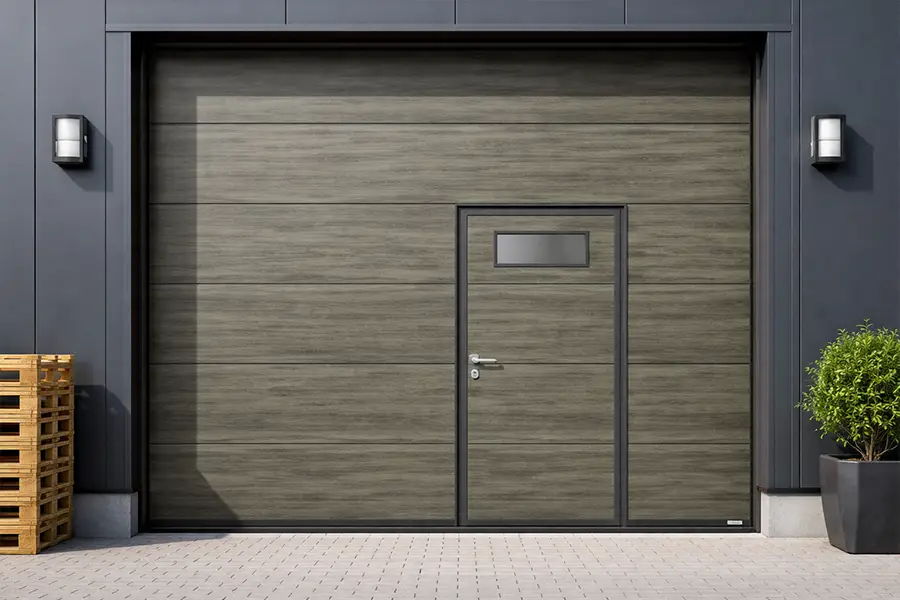
For modern facilities, the entrance is more than a barrier; it is a smart access point. Integrating wicket doors (pedestrian access) into the main door leaf allows personnel to enter without cycling the entire system. This strategy preserves the internal climate and extends the life of the heavy-duty torsion springs.

High-Speed Integration for Rapid Logistics
While real wood is too heavy and dimensionally unstable for high-speed operation, faux wood steel garage doors can be paired with variable frequency drives (VFD) for opening speeds up to 1.5m/s. This rapid action minimizes air exchange, a vital factor for facilities moving high volumes of temperature-sensitive cargo.
Strategizing for Long-Term Structural Security
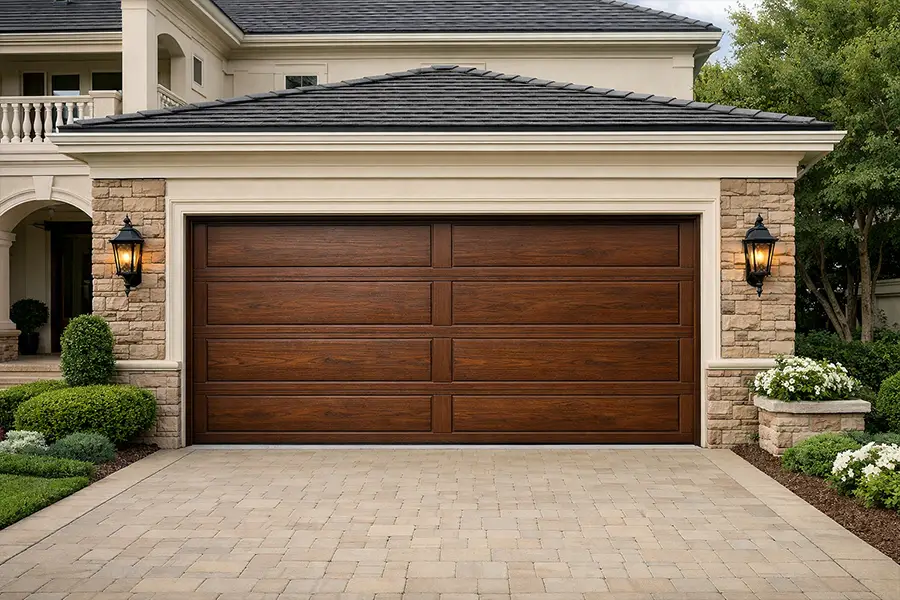
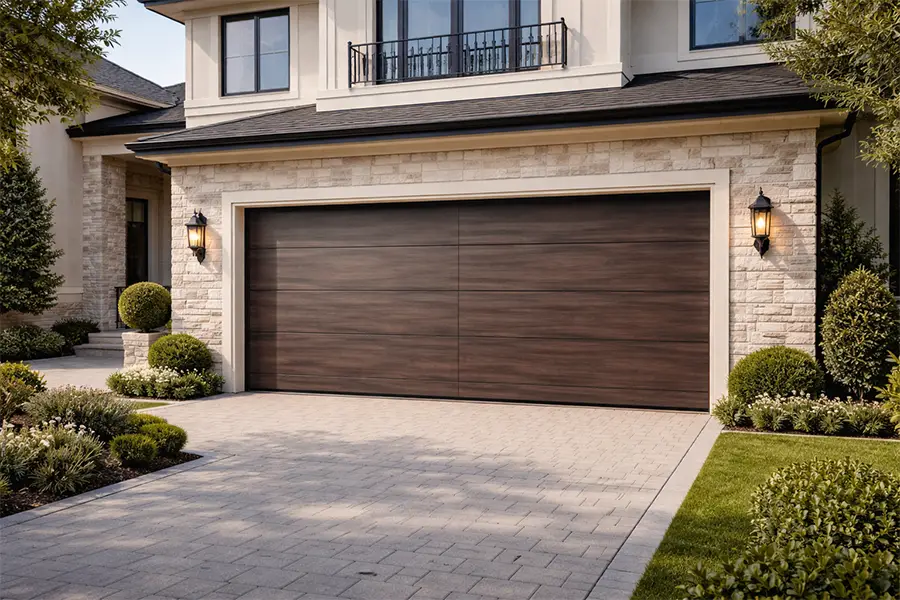
Selecting the appropriate door system involves a comprehensive analysis of environmental stressors and operational frequency. For high-end business parks where brand image must coexist with industrial strength, the faux wood steel garage door offers an unmatched value proposition. It delivers the warm architectural aesthetic of natural cedar or mahogany without the structural liabilities associated with organic timber.
By choosing high-R-value steel systems, facility managers secure their supply chain’s integrity, mitigate rising energy overheads, and ensure the safety of both personnel and inventory.